
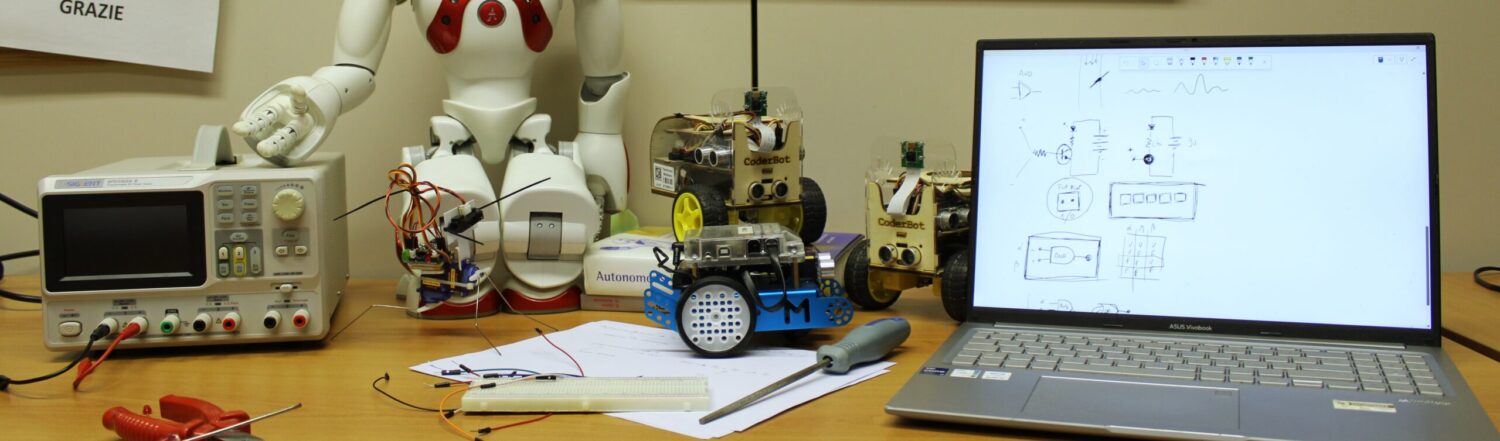
This is a list of PhD, Bachelor’s and Master’s courses offered by the University of Milano-Bicocca that rely, in some way or another, on the Lab. Contact edoardo.datteri@unimib.it for more information.
PhD course: Scientific method: the fundamental concepts
This course offers an introduction to the philosophy of science, specifically designed for PhD students at the University of Milano-Bicocca who have little or no background in philosophy. Philosophy of science is a branch of philosophy concerned with the methods and the fundamental concepts involved in scientific research. Cornerstone epistemological issues such as the distinction between science and non-science, the characteristics of a good scientific explanation, the relationship between theory and observation, the structure of scientific theories, and the nature of mind, are rarely addressed in scientific courses. However, all “good” scientists ought to reflect on them deeply. The course is open to PhD students in all research fields. It will cover issues pertaining to the foundations of sciences ranging from physics to the educational sciences, with an eye on the role of computer science in understanding the world. The lessons will be centered on students and give priority to discussion. You can find the most recent edition of the course at https://elearning.unimib.it/course/index.php?categoryid=6324

Bachelor’s course: Logic and Philosophy of Science
This course introduces students of the Bachelor’s Degree in Intercultural Communication at the University of Milano-Bicocca to logic, epistemology and the philosophy of science. The first part introduces propositional logic and explains how to prove simple theorems using natural deduction. The second part explores the concepts of truth, belief and knowledge. We discuss Gettier’s counterexamples and possible solutions. The third part deals with the philosophy of science. We introduce and discuss classic issues such as the nature and limits of empiricism, the theory-laden nature of observation, the demarcation problem, the problem of scientific realism and of scientific explanation. Find the current edition of the course here (second year, title “Logica”).
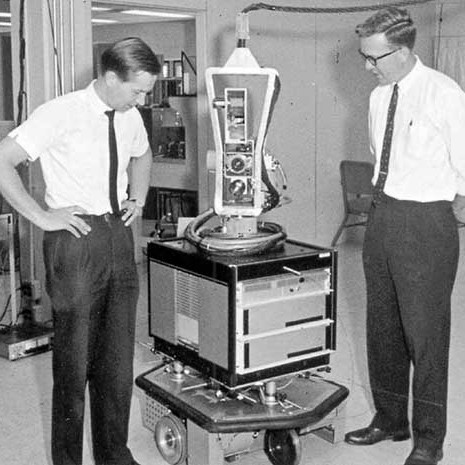
Master’s course: Foundations of Artificial Intelligence and Robotics
This course is offered to Master’s students of the University of Milano-Bicocca. It provides an in-depth introduction to the structure of cognitive science, focusing on the methodological and philosophical questions it raises, such as the structure of cognitive theories, the problem of mental representation, the relationship to folk psychology and the concept of mechanism. The second part offers an introduction to the symbolic and neural mechanisms used in artificial intelligence, considering the use of computers and robots as models to understand cognition. You can find here the most recent edition of the course (second year).