

- PI: Edoardo Datteri
- Lab budget: € 1.5 million
- Funding program: FIS Advanced Grant (Fondo Italiano per la Scienza)
- Duration: 2026 – 2031
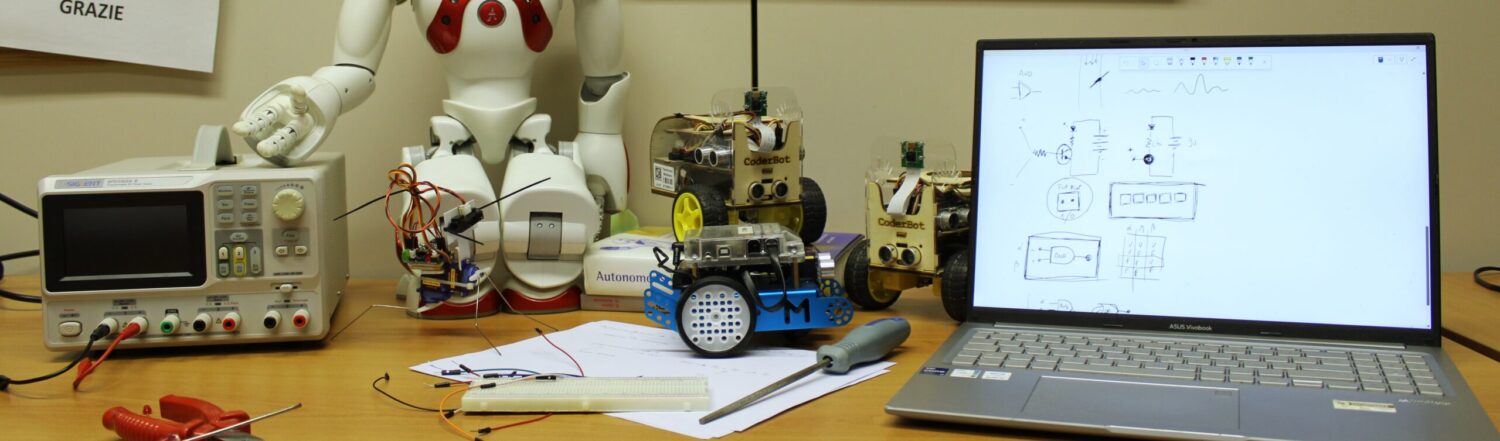
Robots are often used as models to study the cognition and behaviour of living organisms. They are deployed to automate measurements, simulate and test cognitive and neural mechanisms, provide reliable and controlled stimuli for behavioural studies, explain individual and social cognition. This experimental use of robots, that dates back to Cybernetics, is widely accepted within the robotics community and related scientific circles. However, in other scientific communities that are more traditional in their experimental strategies, doubts arise as to whether this use of robots is methodologically sound. The five-year RiLS project aims to determine whether robots can constitute valid scientific models for life science research. Can they provide genuine, reliable and epistemically justifiable knowledge about the behavioural and cognitive mechanisms of living systems?
HERB – Human Explanation of Robotic Behaviour
- PI: Edoardo Datteri
- Lab budget: € 92.745
- Funding program: PRIN (Ministry of University and Research)
- Duration: 2023 – 2026
- Other partners: INDIRE (Margherita di Stasio), University of Florence (Riccardo Bruni), CNR-ICAR (Agnese Augello)
The HERB project aims to shift the focus of research from whether people attribute a mind to robots to fine-grained explanations of robotic behaviours. Rather than simply investigating whether people believe that robots have a mind, we want to examine how they think their mind works. We aim to examine the cognitive, rational and emotional architecture that people attribute to robots in various interaction contexts, as well as how they use these theories to explain robotic behaviour. We will study the structure and content of human explanations of robotic behaviours (HERBs) as depending on the cognitive and social abilities of the robots, the characteristics of the human partners (e.g. computer literacy, age and purpose) and whether the human can modify the robot’s behaviour. Drawing on interdisciplinary dialogue between philosophers of science, logicians, pedagogists, and roboticists, the project will produce analyses of HERBs in various interaction contexts, as well as reliable HERB study methods. A key feature of this project is that the analysis of HERBs will be empirical yet firmly rooted in philosophical analyses of the ‘logic’ of scientific explanation. Two complementary philosophical units within the consortium (one with expertise in the philosophy of science and the other in logic) will provide the conceptual framework and address epistemological questions concerning how humans understand robotic behaviours. The two units will also carry out empirical analyses of HERBs in educational and social contexts, and coordinate the development of methods for studying HERBs. Overall, the consortium involves several complementary and well-integrated disciplines, including philosophy of science, logic, pedagogy and robotics.
Fostering STEM inclusion among girls with migrant background: the role of educational robots
- PI: Monica Pivetti (University of Bergamo)
- Lab budget: € 111.450
- Funding program: PRIN (Ministry of University and Research)
- Duration: 2023 – 2026
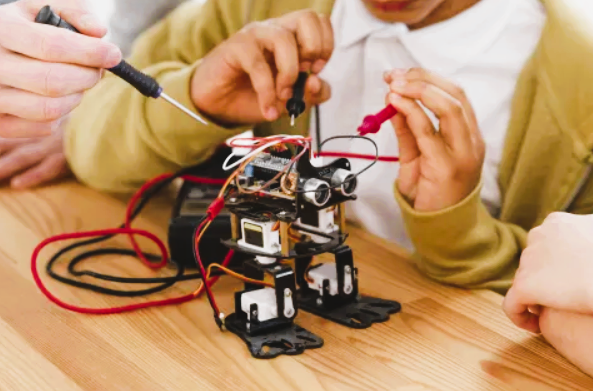
The project’s main objective is to analyse how educational robotics activities can encourage engagement in STEM subjects, particularly among girls from migrant backgrounds. In line with this goal, the RobotiCSS Unit will study how culture shapes children’s understanding of, and attitude towards, social robots. Using a non-geographical approach, we will study cultural profiles and use explicit and implicit experimental tools to model children’s attribution of human-like abilities to humanoid robots.